What Wildlife Crime Really Is and How the World Is Fighting Back
A confiscated pangolin. Ivory tucked inside a shipment of timber. A songbird for sale in a market hundreds of miles from where it hatched. Scenes like these belong to a trade almost none of us ever witness up close, though it touches nearly every country there is. Wildlife crime — the illegal capture, sale, and killing of wild animals and plants — has grown into one of the largest black markets anywhere. Getting a real handle on what it involves is where any progress tends to begin. And honestly, most of us can do more about it than we'd guess.
What Wildlife Crime Means and Why It Is So Hard to Stop
What makes it so stubborn is the way it's put together. The networks bend easily, they have real money behind them, and they reroute the second one border tightens up. So much of daily life happens on a screen now — we stream documentaries, we wind down with a game at gangstasino casino after work — and that same wired-up world has opened fresh marketplaces for traffickers too. To stop wildlife crime, police, customs, and whole communities across different countries have to pull in the same direction.
Strip it back and wildlife crime is any illegal activity built around wild species — poaching, smuggling, and the trade in protected animals or whatever gets made from them. Ask what wildlife crime looks like day to day, though, and there isn't one tidy answer. A tiger killed for its bones. An orchid pulled out of the ground for a private collection. A parrot drugged and zipped into hand luggage. It might be a single person acting alone, or a network with the reach to move goods between continents.
“The illegal wildlife trade doesn’t respect maps or laws. It follows demand, and demand is something every one of us has a small part in shaping.”
The Numbers Behind a Global Black Market
Pinning down wildlife crime statistics is genuinely hard, since the whole business depends on staying hidden. The estimates we do have still land with some weight. International agencies reckon the trade is worth billions a year, which puts it in the same bracket as smuggling drugs, weapons, or people. Thousands of species show up in seizure logs annually, and because so many shipments are never caught at all, the true figures are almost certainly worse than the records suggest.
There's a living population straining under every one of those numbers. The table gives a rough sense of how the pressure falls across different animals.
| Species group | Main driver of demand | Conservation pressure |
|---|---|---|
| Elephants | Ivory carving and ornaments | Severe in parts of Africa |
| Rhinos | Horn for status and remedies | Critical for several species |
| Pangolins | Scales and meat | Most trafficked mammal |
| Big cats | Skins, bones, trophies | High across regions |
Numbers on their own seldom shift how anyone feels, but they do map out the scale of things. A handful of patterns keep resurfacing whenever you look at the data:
- Demand often clusters in a handful of large consumer markets
- Rare species can grow more valuable as they become scarcer
- Online platforms have widened the reach of illegal sellers
- Weak penalties in some regions keep the risk low for traffickers
- Corruption can quietly ease goods across borders
On the Front Lines of Wildlife Crime Prevention
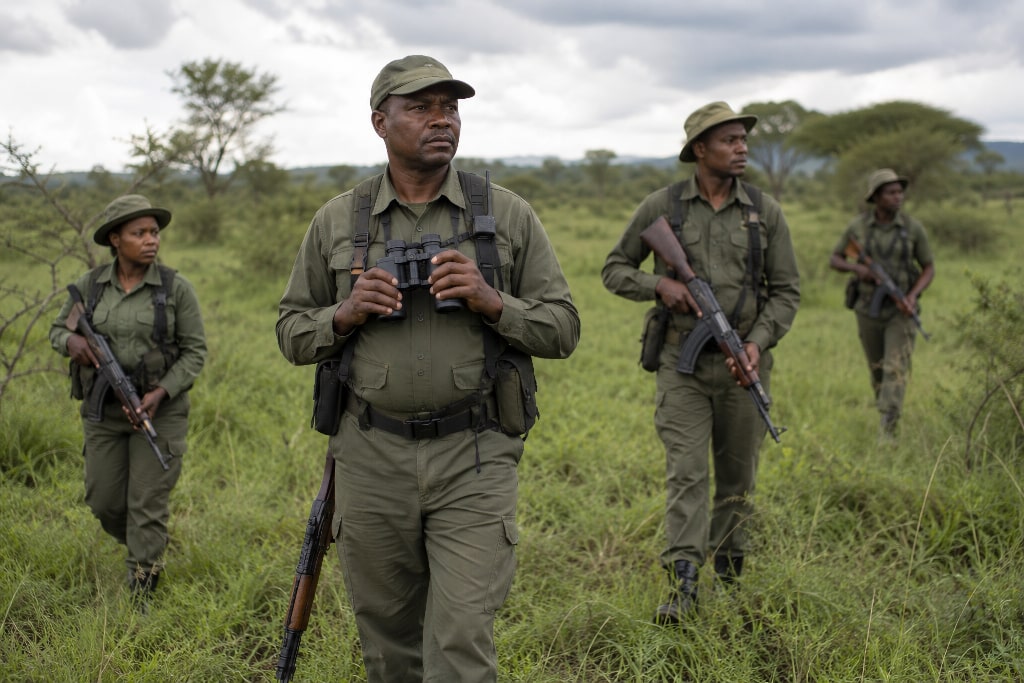
Wildlife crime prevention isn't a single move; it's a stack of them working at the same time. Rangers walk patrols through the reserves, sometimes putting themselves in genuine danger to do it. Customs teams pull cargo apart looking for concealed animal parts. Investigators follow the money and the messages back up the chain. Something that slips past one layer will often get caught by the next, but no layer holds up well by itself.
Newer technology has quietly become part of the toolkit, backing up the human work rather than standing in for it. The comparison below lays a few of those tools side by side.
| Approach | How it works | Strength |
|---|---|---|
| Ranger patrols | On-the-ground monitoring | Direct deterrence |
| DNA testing | Tracing origin of seized goods | Builds legal cases |
| Camera traps | Remote wildlife surveillance | Wide, quiet coverage |
| Data analysis | Spotting trafficking patterns | Predicts hotspots |
Whether any of it sticks usually comes down to the people living nearby. Give them a real stake in keeping wildlife around, whether that's tourism income, steady work, or just local pride, and poaching loses a lot of its pull. The lasting wins in combating wildlife crime tend to grow from close to home, not from enforcement flown in from somewhere far off.
“You can post as many guards as you like, but the strongest fence around a species is a community that wants it to survive.”
How Everyday Attention Online Helps Combat Wildlife Crime
Hardly any of us will ever set foot on a patrol. Even so, what we tap and share online isn't nothing. Attention decides which stories travel, which campaigns get money behind them, and which markets start to sweat a little. A single clip of an animal being rescued can outrun a formal report by a mile.
That pull works in both directions, so it's worth being deliberate about where you point it. A few small, easy habits turn screen time into something useful for wildlife:
- Share verified campaigns from reputable conservation groups
- Report suspicious wildlife listings on shopping and social platforms
- Support organisations with small, regular donations
- Choose ethical tourism and avoid attractions that exploit animals
- Learn to recognise products made from protected species
You don't need to be an expert for any of that. Mostly it's about showing up fairly regularly and giving something a second look before you scroll past. Attention, spent with a bit of intent behind it, quietly turns into a kind of protection.
Turning Awareness Into Action That Lasts
Knowing about wildlife crime only earns its keep if it shifts something. The people who leave a mark rarely try to cover everything; they grab one thread and don't let go. Sometimes that's backing a single charity they trust. Sometimes it's just knowing enough to flag something that looks off when they come across it. The small stuff, kept up over months and years, tends to outlast the big bursts of good intention.
No single law, arrest, or shared post is going to make wildlife crime vanish. It shrinks as the demand behind it shrinks, and that demand is really the sum of millions of everyday choices. So get familiar with what the trade actually looks like, throw your weight behind the people already fighting it, and let your ordinary, day-to-day attention speak up for the animals that can't.